World Cup 2026 Mexico: English-Speaking Doctor & Telemedicine for Tourists
World Cup 2026 Mexico: Why Telemedicine Will Be Essential for International Visitors
Mexico is about to host the largest FIFA World Cup in history — the first ever with 48 teams, 104 total matches, and three nations sharing the stage. For Mexico City, Guadalajara, and Monterrey, this is a historic economic opportunity. But behind the celebrations, a quieter challenge is taking shape: how will an already-stretched healthcare system handle 5.5 million international visitors who don’t speak Spanish and don’t know how to navigate local medical care?
This article breaks down exactly why Mexico’s health infrastructure will be under pressure during the World Cup, what that means in practice for English-speaking tourists, expats, and digital nomads — and how telemedicine offers a faster, simpler, and safer alternative to crowded emergency rooms.
5.5 million visitors: what the numbers actually mean
The scale of the 2026 World Cup in Mexico is difficult to overstate. According to official estimates from Mexico’s government and FIFA, the country is expected to welcome over 5.5 million international visitors across the tournament window — a figure confirmed by both the U.S. Embassy in Mexico and Mexico’s official 2026 FIFA World Cup representative.
These are not just football fans. They include tourists combining the World Cup with beach holidays, business travelers, long-stay expats, remote workers, and a growing wave of digital nomads who live permanently across Latin America. The three Mexican host cities are preparing for an influx unlike anything they have managed before.
Beyond the three host cities, Cancún is positioning itself as a strategic gateway — with direct flights to all World Cup venues across Mexico, the U.S., and Canada — meaning the health impact will ripple far beyond the stadium cities themselves.
Mexico’s healthcare system: already under strain
To understand the challenge facing international visitors, it helps to understand the baseline. Mexico’s public healthcare system is constitutionally guaranteed — but in practice, patients describe a very different reality. Reports from May 2026 describe people queuing at 9am and not leaving until 4 or 5pm for a basic consultation. Months-long waits for specialist appointments. Clinics stretched beyond capacity on an ordinary weekday.
The structural reasons are well documented. Mexico spends roughly 3% of GDP on public healthcare — approximately half of what international health authorities recommend. The country’s public system is also fragmented by employment status: IMSS covers formal sector workers, ISSSTE covers government employees, and IMSS-Bienestar serves lower-income populations. These systems do not talk to each other easily, and tourists and short-term international visitors are not eligible for any of them.
What this means for visitors in practice
As a tourist or short-term visitor in Mexico, public healthcare is not an option available to you. Your realistic choices are: a private clinic or hospital (where you pay out-of-pocket, often with costs higher than expected and bills that must be settled before discharge), or a telemedicine consultation with an English-speaking doctor who can triage your situation and, where appropriate, issue a valid digital prescription accepted at local pharmacies.
Mexico’s public system is in the middle of a major reform — a national health credential rollout began in 2026, working toward a Universal Health System by 2030. But that process is for residents, not visitors, and it will take years to deliver meaningful change.
During a mass event like the World Cup, emergency rooms and private clinics in Mexico City, Guadalajara, and Monterrey will face a surge unlike anything in recent memory. This is not speculation — it is the documented pattern of every major international sporting event, from the Olympics to the Rugby World Cup. Respiratory infections, gastrointestinal illness, sunstroke, and minor injuries spike sharply. The majority of these cases do not need emergency care. But without a clear alternative, they end up there anyway.
The real barriers for international visitors
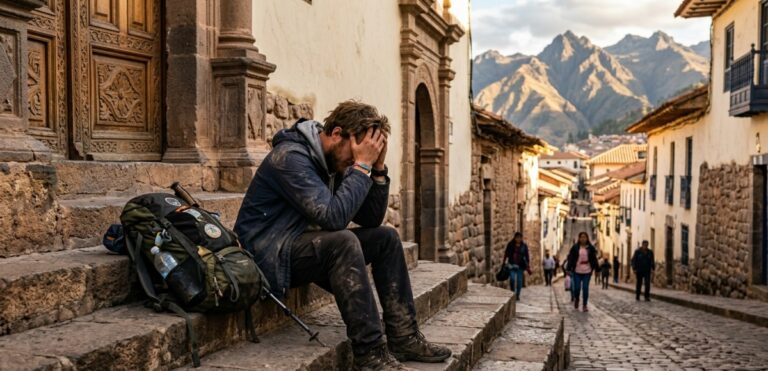
For an English-speaking tourist or expat in Mexico, the challenge of accessing medical care is rarely about the severity of the condition. In most cases, the problem is not clinical — it is logistical, linguistic, and navigational. The most common barriers reported by international visitors are:
- Cannot explain symptoms accurately in Spanish
- Don’t know which clinic to trust or how to find it
- Hours lost waiting in emergency rooms for non-urgent issues
- Cannot get a home prescription accepted or renewed locally
- Medical costs at private clinics are higher than anticipated
- Don’t understand how Mexico’s healthcare system works
- Concerns about miscommunication during the consultation
- Difficulty obtaining travel health documentation or medical letters
In a medical context, even a simple problem becomes stressful when there’s a language barrier. A UTI, a skin infection, a lost prescription — these are all straightforward conditions. But trying to navigate them alone, in a foreign language, in an unfamiliar system, while feeling unwell, is a completely different experience. And during the World Cup, when clinics are already under pressure, that experience will be harder than usual.
A scenario that will happen thousands of times
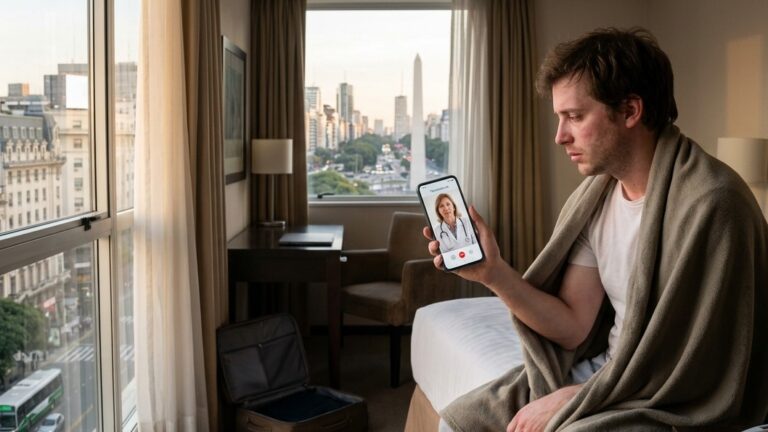
You’re in Guadalajara for the Argentina match. You wake up feverish — sore throat, general exhaustion — and realize your usual prescription ran out two days ago. You don’t speak Spanish. The hotel receptionist gives you the name of a private clinic 40 minutes away. The waiting room has 60 people in it. The doctor, when you finally see one two hours later, speaks limited English. You leave with a prescription you’re not sure you understood correctly, for a medication you’re not sure is available at the pharmacy around the corner. Your afternoon — and possibly your match — is gone.
English-speaking doctor available now — video consultation in under 15 minutes, legal prescription sent to your phone. EUR 33.
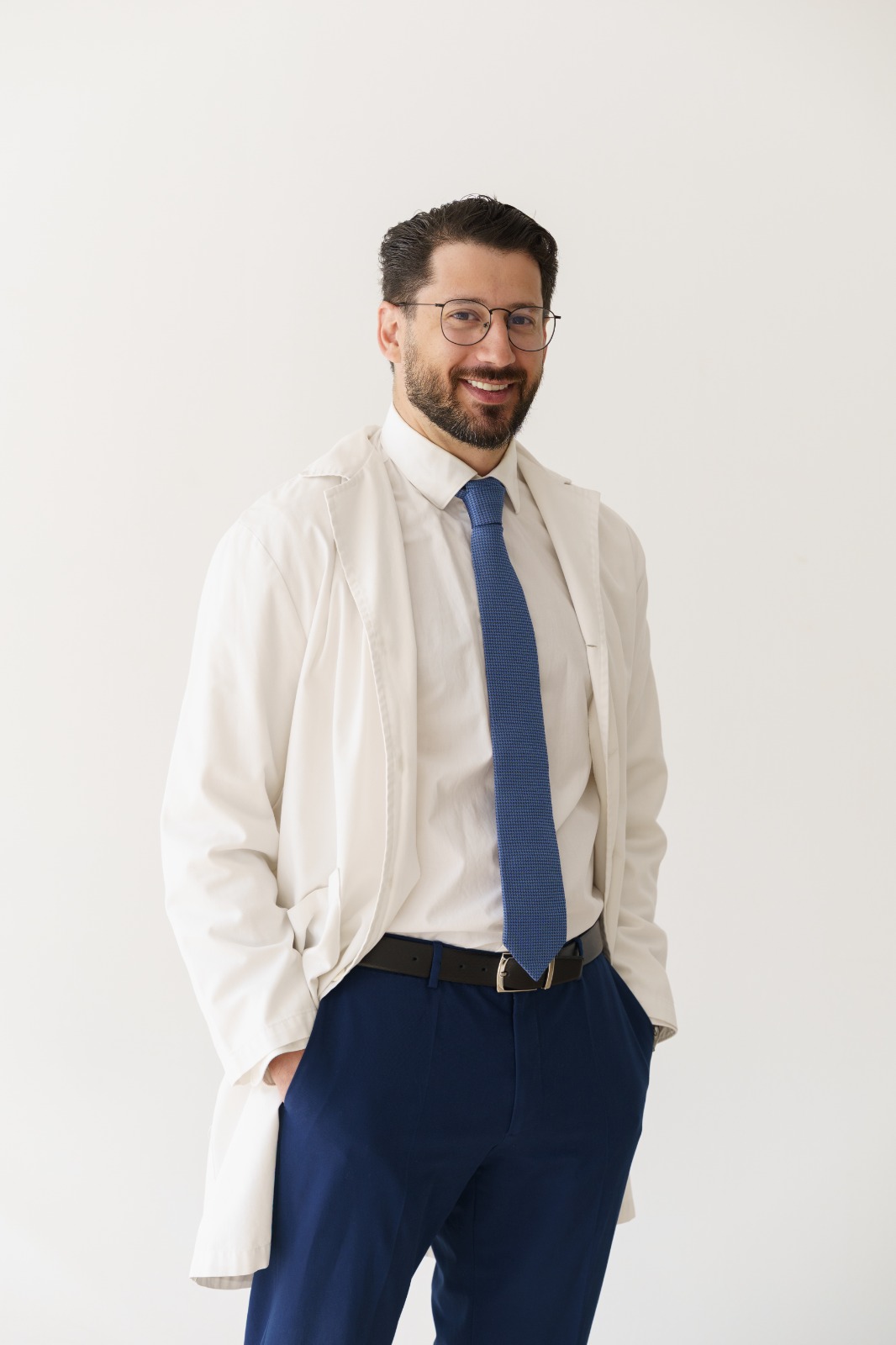
Talk to Dr. Pablo now →This is not a worst-case scenario. It is a routine one, replicated every day for thousands of international visitors across Mexico — and it will happen at scale during the World Cup. The good news is that it is entirely preventable.
What most travel medical visits actually look like
Mass international sporting events produce predictable medical demand. The overwhelming majority of cases are not emergencies. They are manageable conditions that, in the visitor’s home country, would be handled with a quick GP appointment or a pharmacy consultation. In Mexico, without the right access, those same conditions consume hours and significant money. The most common travel-related health issues during large tournaments include:
The critical insight here is this: the vast majority of these cases do not require a physical examination, a hospital bed, or an emergency room. They require a qualified doctor, a clear conversation, and — in many cases — a valid prescription. All of that is now possible in minutes, from a phone, in English, from anywhere in Mexico.
When teleconsultation handles these cases effectively, two things happen. The patient gets appropriate care quickly and without unnecessary cost. And emergency departments stay free for the patients who genuinely need them — a significant benefit to both tourists and to Mexico’s health system as a whole.
How telemedicine solves the problem
TravelDoctores is designed specifically for this situation: English-speaking tourists, expats, and digital nomads in Mexico and other Spanish-speaking countries who need fast, trustworthy medical care without the friction of navigating a foreign health system.
Submit your request
Fill out a short form with your symptoms from your phone or laptop. No registration, no insurance details.
Connect in minutes
Dr. Pablo joins a secure video call in English — usually within 15 minutes, 24/7 including match days.
Get your prescription
Digital prescription sent to your phone via WhatsApp or email. Valid at any pharmacy in Mexico.
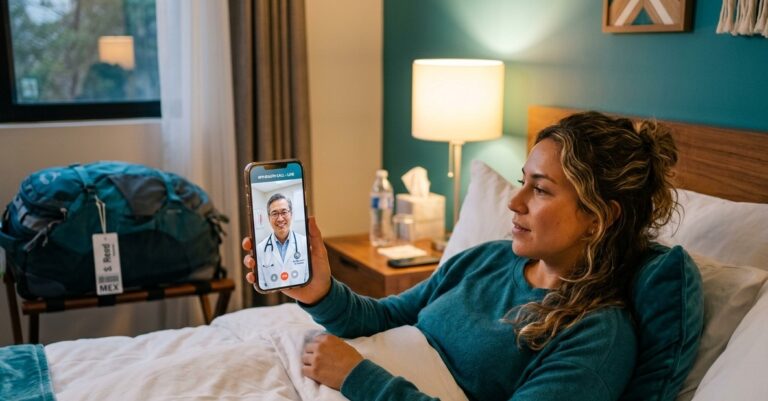
A consultation works like this: you connect with a licensed family medicine specialist through a secure, HIPAA and GDPR-compliant platform — from your hotel room, your Airbnb, the airport, a co-working space, or anywhere with a data connection. The entire consultation happens in English. The doctor takes a full clinical history, applies evidence-based protocols, and either provides treatment directly or correctly refers you to in-person care if your condition requires it.
Clinical standards — not just convenience
TravelDoctores consultations are formal medical acts, not informal advice calls. Doctors apply validated clinical protocols including the Centor criteria for respiratory infections (to distinguish viral from bacterial causes and avoid inappropriate antibiotic prescribing), evidence-based UTI management guidelines, and standard dermatological assessment frameworks. The platform complies fully with HIPAA and GDPR data protection standards.
For travelers worried about the quality of remote care: the standard is identical to an in-person visit for the conditions that telemedicine is appropriate for. The difference is speed, language, and accessibility — not clinical rigor.
| Service feature | What it means for World Cup visitors |
|---|---|
| Consultation in English | No symptoms lost in translation. Communicate your full medical history clearly, without guessing at vocabulary. |
| Zero waiting rooms | Connect from your hotel room, Airbnb, stadium, or airport. No displacement, no exposure to other illnesses in waiting rooms. |
| Legal digital prescription | Issued through Prescrypto — Mexico’s certified digital prescription platform — and valid at all local pharmacies. Sent directly to your phone. |
| Correct triage | Conditions that need in-person care are identified and referred appropriately — keeping ERs available for genuine emergencies. |
| Travel documentation | Medical letters, fit-to-fly certificates, and travel health documentation issued digitally when clinically appropriate. |
| HIPAA & GDPR compliant | Your medical data is protected to international standards. Fully secure, private, and confidential. |
Getting a legal prescription in Mexico as a tourist
One of the most common — and most frustrating — situations for international visitors in Mexico is arriving with a valid prescription from their home country, only to find that local pharmacies cannot dispense against it. This is not an arbitrary rule. Mexico’s pharmacy system requires prescriptions issued through certified, locally-recognized digital platforms that pharmacists can verify in real time.
Your prescription from the UK, the US, Germany, or Australia is legally valid at home — but it carries no verifiable digital signature within Mexico’s pharmacy network. The pharmacist is not permitted to dispense controlled or prescription medications against it, regardless of how clearly it is written.
The solution: a locally valid digital prescription
TravelDoctores issues prescriptions through Prescrypto — the certified digital prescription platform used across Mexico’s private healthcare sector. This means your prescription is immediately verifiable by any pharmacist in the country, issued by a licensed physician, and fully compliant with Mexican healthcare regulations.
From the moment you connect with a TravelDoctores physician to the moment you collect your medication at a local pharmacy, the entire process typically takes under an hour — often significantly less.
This matters especially for travelers managing chronic conditions, who may need ongoing medication during a multi-week stay for the World Cup. A single teleconsultation with TravelDoctores can resolve a month’s worth of prescription continuity — legally, quickly, and without a visit to a clinic.
- Prescription issued by a licensed Mexican-registered physician
- Processed through Prescrypto — Mexico’s certified digital prescription system
- Valid at all pharmacies across Mexico City, Guadalajara, Monterrey, and nationwide
- Sent directly to your phone — no printing required
- Covers general medications, antibiotics, and ongoing prescription renewals
FAQ: medical care during the World Cup in Mexico
Can I see a doctor in English in Mexico City, Guadalajara, or Monterrey during the World Cup?
Yes — through TravelDoctores. Our licensed family medicine specialists are available on demand in English, from anywhere in the three host cities and across Mexico. No need to locate a bilingual clinic, make an appointment, or wait in a queue. You connect instantly from wherever you are. Mexico City · Guadalajara · Monterrey
Is Mexico’s public healthcare system available to tourists during the World Cup?
No. Short-term tourists and international visitors are not eligible for Mexico’s public healthcare system (IMSS, ISSSTE, or IMSS-Bienestar). Private clinics or telemedicine platforms are the practical options for visitors. It’s also worth noting that many private hospitals require full payment before discharge — so having either travel insurance or a telemedicine option that handles common cases is strongly recommended.
Can I get my regular prescription renewed while I’m in Mexico for the World Cup?
Yes. TravelDoctores can evaluate your medication needs and issue a locally valid digital prescription through Prescrypto — Mexico’s certified prescription platform — after a consultation. Your home country prescription cannot be used directly at Mexican pharmacies, but a TravelDoctores consultation resolves this in under an hour.
What conditions can a teleconsultation actually treat? When do I need to go in person?
The majority of common travel health issues — respiratory infections, UTIs, gastroenteritis, skin conditions, prescription renewals, sunstroke management, and travel documentation — are fully resolvable by teleconsultation. Conditions that require physical examination, imaging, or emergency intervention are identified during the consultation and referred appropriately to the right in-person facility. The teleconsultation itself acts as intelligent triage, not a replacement for emergency care.
Is telemedicine legal and regulated in Mexico?
Yes. Telemedicine is a recognized and legally regulated medical practice in Mexico. TravelDoctores operates fully within Mexican healthcare law, with consultations conducted by licensed physicians and prescriptions issued through certified platforms. All consultations comply with HIPAA and GDPR privacy standards.
How much does a TravelDoctores consultation cost compared to a private clinic in Mexico?
Private clinic consultations in Mexico City, Guadalajara, and Monterrey typically range from $40 to $150 USD for a standard visit, before medication costs, and with waiting times of one to several hours. A TravelDoctores consultation is EUR 33 — available in minutes, in English, with your digital prescription delivered directly to your phone.
Conclusion: don’t let a medical barrier define your World Cup experience
The 2026 FIFA World Cup is a once-in-a-generation event for Mexico — and for the millions of international visitors who will travel here for it. The experience should be defined by the matches, the cities, the food, and the football. Not by hours in a waiting room, a lost prescription, or a confusing conversation in a foreign language with a doctor you’ve never met before.
Mexico’s healthcare system is doing its best under genuine structural pressure — underfunded by international standards, fragmented by design, and not built to absorb a sudden influx of millions of visitors who are ineligible for public care. The gap between what’s needed and what’s available for international visitors is real. Telemedicine doesn’t fix that gap for everyone. But for the vast majority of common travel health needs — the prescriptions, the infections, the GI issues, the skin conditions — it closes it completely.
For tourists, expats, and digital nomads in Mexico, having access to an English-speaking doctor in your pocket is no longer a luxury. During the World Cup, it will be one of the smartest things you can have.
Dr. Pablo J. Rossi, MD
CEO & Family Medicine Specialist — TravelDoctores
traveldoctores.com
English-speaking doctor. On demand. Anywhere in Mexico.
General consultations · Legal digital prescriptions · Travel health documentation
Available now — no appointment needed.
Book your consultation now →