Cusco Altitude Sickness: Traveler’s Guide
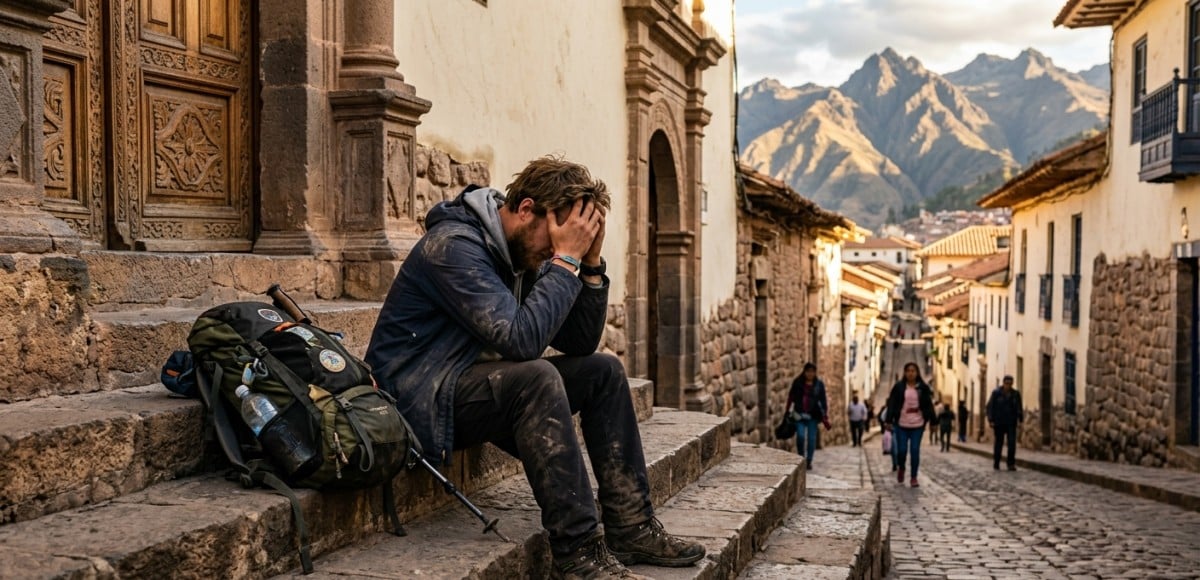
You’ve just landed in Cusco. Within a few hours — sometimes less — the headache starts. Maybe some nausea. Climbing the stairs to your hotel room leaves you breathless. You sit on the bed wondering if this is normal or if something is wrong.
It’s normal. And it’s also something you need to take seriously. Altitude sickness in Cusco affects up to 80% of travelers who arrive from sea level — not because they’re unfit, but because Cusco sits at 3,400 metres above sea level, where the air has roughly 30% less oxygen than at the coast. This guide tells you exactly what to expect, what to do, and when the symptoms mean you need a doctor.
Already feeling the altitude and not sure how serious it is?
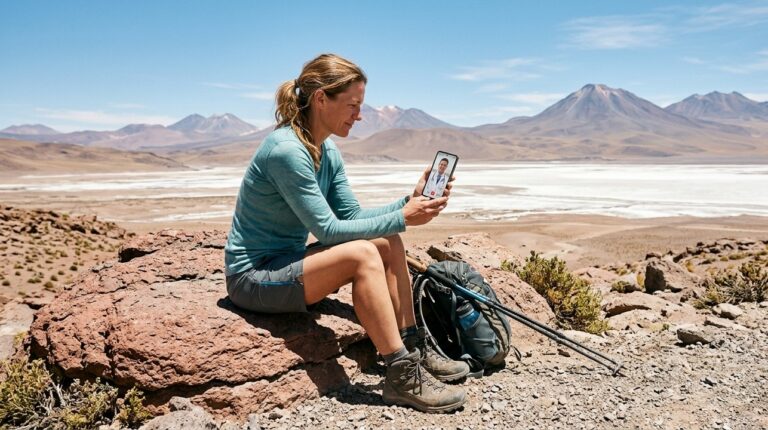
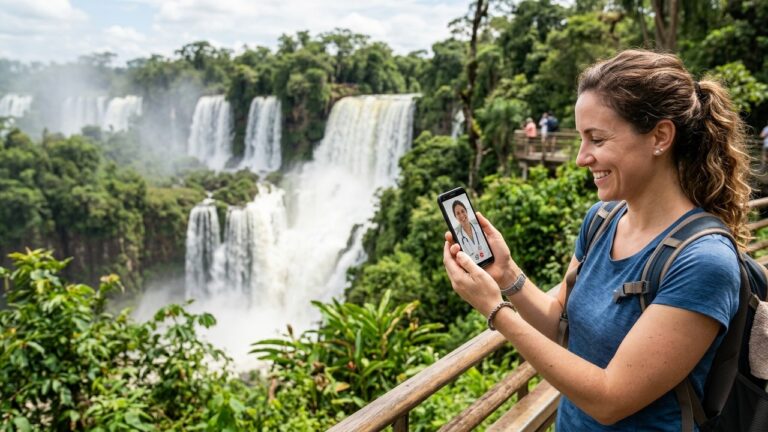
Talk to a licensed doctor online in under 15 minutes — from your hotel in Cusco, no waiting room required.
SEE A DOCTOR NOW — €33Why altitude sickness in Cusco hits harder than most destinations
Cusco is one of the highest major cities in the world. At 3,400 metres, it sits significantly above Bogotá (2,625m), well above Mexico City (2,240m), and only slightly below the altitude where serious complications like HACE and HAPE become a real risk. To put it in perspective:
The key detail: Machu Picchu itself is lower than Cusco. Most travelers feel better at the citadel than in the city — but they still have to pass through Cusco to get there, and the altitude sickness typically hits on arrival in the city, not at the ruins.
Flying directly from a sea-level city? You’re at higher risk than someone coming from Lima (154m) via an overland route. The faster and more drastic the altitude change, the harder the body has to work. If your schedule allows, spending a night in Arequipa (2,335m) before Cusco significantly reduces the impact.
Symptoms: how to know what level you’re at
Altitude sickness in Cusco — medically known as Acute Mountain Sickness (AMS) — typically appears 6 to 12 hours after arriving. Knowing the difference between mild, moderate and severe determines whether you rest or go to hospital immediately.
- Headache
- Fatigue
- Nausea without vomiting
- Dizziness
- Breathless on exertion
- Poor sleep first night
- Headache not relieved by ibuprofen
- Vomiting
- Increasing fatigue
- Breathless at rest
- Difficulty walking straight
- Confusion or disorientation
- Cannot walk unaided
- Persistent dry cough
- Blue lips or fingernails
- Gurgling breathing
Severe symptoms are a medical emergency. HACE (High Altitude Cerebral Edema) and HAPE (High Altitude Pulmonary Edema) can be fatal within hours without treatment. If you or anyone in your group has confusion, can’t walk straight, or has gurgling breathing — call 105 (Peru emergency number) or go to the nearest hospital immediately. Do not wait.
Moderate symptoms — headache not improving, vomiting, breathless at rest?
Don’t wait it out. A doctor can assess you online in minutes and tell you whether you need in-person care or can manage from your hotel.
CONSULT A DOCTOR — €33What to do in your first 24 hours in Cusco
Treatment: what actually works and what doesn’t
Acetazolamide (Diamox) — the most established option
Acetazolamide is the medication with the most clinical evidence behind it for preventing and treating altitude sickness. It works by stimulating faster, deeper breathing, which raises blood oxygen levels. It requires a prescription, and it isn’t the right choice for everyone — a doctor needs to review your health history first, including any allergies or other conditions, before prescribing it.
Common side effects can include increased urination and tingling in fingers and toes — both usually harmless, but your doctor can tell you what to expect based on your specific case.
Coca tea (mate de coca) — the honest answer
Every hotel in Cusco will offer you coca tea on arrival. It’s a cultural tradition and a genuine gesture of welcome. The honest medical answer: there is no strong clinical evidence that coca tea significantly treats altitude sickness in Cusco. The warm liquid helps hydration, and a mild stimulant effect can temporarily reduce fatigue — but it will not replace rest, hydration or acetazolamide if you genuinely need it.
Drink it if you enjoy it. Don’t rely on it as your medical strategy.
Supplemental oxygen canisters
Many hotels and pharmacies in Cusco sell small oxygen canisters. They provide temporary relief — 5 to 10 minutes of improved symptoms — but don’t accelerate acclimatization. Useful for short-term relief, not as a substitute for proper treatment. For severe symptoms, a hospital with continuous oxygen supply is what you need, not a canister.
Your options for seeing a doctor in Cusco as a tourist
Not sure how serious your symptoms are, or what you actually need?
A doctor can assess your altitude sickness in Cusco and tell you whether you need medication, rest, or something else — online, in English, any time of day or night.
TALK TO A DOCTOR — €33Frequently asked questions about altitude sickness in Cusco
For most travelers, mild symptoms peak within 24–36 hours and improve significantly by day 2–3 as the body acclimatizes. If symptoms are getting worse after 48 hours — not stable, not improving, but worse — see a doctor. That’s not normal acclimatization.
It can help, especially if you have a history of altitude sickness or are flying directly from sea level — but it’s a prescription medication, and it isn’t right for everyone. Talk to a doctor before your trip; they can review your health history and tell you whether it’s a good option for you.
Very likely yes. Machu Picchu sits at 2,430m — almost 1,000 metres lower than Cusco. Most travelers feel noticeably better at the citadel. The challenge is that you still have to spend time in Cusco before and after, so acclimatizing properly in the city first is essential.
Minimum 2 full days before any trek above 4,000m. For Rainbow Mountain (5,020m) or Ausangate, 3+ days is strongly recommended. Feeling fine on day two in Cusco doesn’t mean you’re ready for 5,000m — acclimatization is progressive. A doctor can advise based on your specific symptoms and planned itinerary.
After you’ve fully acclimatized (typically day 3–4), moderate alcohol is fine. Be aware that alcohol hits harder at altitude than at sea level — even acclimatized travelers often find that one or two drinks feels like more. Avoid alcohol entirely for the first 48 hours and before any high-altitude day trips.
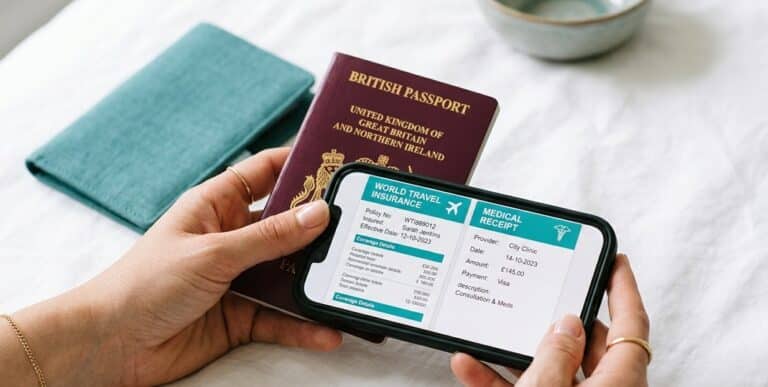
Most comprehensive travel insurance policies cover medical treatment including altitude sickness. Keep your consultation invoice and medical report from TravelDoctores — those are the documents your insurer will ask for to process a reimbursement claim.
Before you arrive: what to do now
- If you have a history of altitude sickness — consult a doctor before your trip about starting acetazolamide preventively.
- Build in a rest day on arrival. Don’t book tours for day one. Your body needs time — give it that.
- Pack ibuprofen and paracetamol. Available in Cusco pharmacies, but easier to have in your bag when symptoms hit at midnight.
- Consider an overland route. Flying Lima → Cusco directly is the hardest on your body. If you have time, a night in Arequipa (2,335m) or the Sacred Valley first makes a real difference.
- Save TravelDoctores now. When you’re lying in bed at 2am with a pounding headache wondering if this is normal, you don’t want to be searching for options then.
- Don’t plan Rainbow Mountain for day two. No matter how good you feel on day one — wait until you’ve been fully symptom-free in Cusco for at least 48 hours before heading above 4,000m.
Dealing with altitude sickness in Cusco?
Talk to a licensed doctor online in under 15 minutes.
Prescription to your phone · €33 · No Peruvian insurance · Available 24/7.