Sick in Bogotá: What to Do as a Traveler
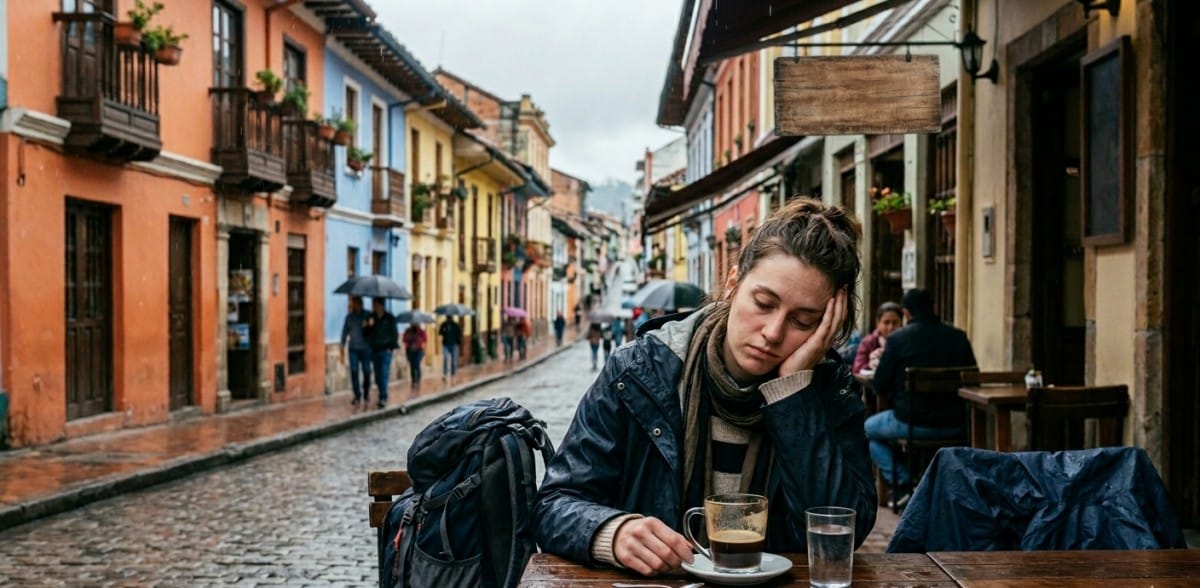
You’re in Bogotá — one of the most vibrant, complex and underrated cities in Latin America. Street food on every corner, coffee culture, nightlife in Zona Rosa, day trips to the Salt Cathedral. And then, somewhere between day one and day three, you feel it: a headache, an upset stomach, a sore throat, or just that general sense that something isn’t right.
Getting sick in Bogotá as a tourist is more common than most people expect — and not just because of the altitude. The combination of high elevation, cold and rainy weather, rich food, tap water, and a body still adjusting to travel creates a perfect storm. This guide covers the most common health issues and exactly what to do about them.
Already feeling sick in Bogotá and need help now?
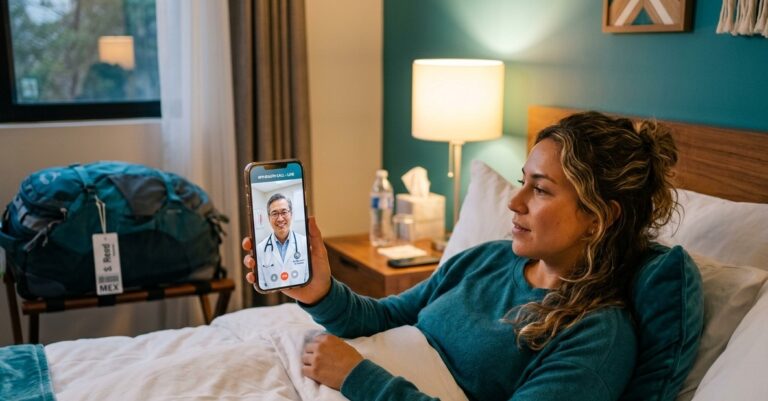
Talk to a licensed doctor online in under 15 minutes — from your hotel, no Colombian insurance needed.
SEE A DOCTOR NOW — €33The most common reasons travelers get sick in Bogotá
Bogotá is not a tropical beach destination — it’s a high-altitude Andean capital at 2,625 metres, with a cool, often rainy climate and a food scene that ranges from pristine restaurants to street carts. Each of these factors comes with its own health risks.
The altitude factor: what to expect in Bogotá
Bogotá sits at 2,625 metres above sea level — high enough that many travelers feel the altitude on arrival, but low enough that serious complications are rare compared to destinations like Cusco (3,400m). Think of it as a significant inconvenience for most people, not a medical emergency.
Typical symptoms in the first 24 hours: headache, fatigue, mild shortness of breath when walking fast or climbing stairs, and disturbed sleep. These usually resolve within 48 hours as your body acclimatizes.
The practical rules for your first day: rest more than you think you need to, drink 3–4 litres of water, avoid alcohol for the first 24 hours, and take ibuprofen or paracetamol for the headache if needed. If symptoms are getting significantly worse after 48 hours rather than better, consult a doctor.
If you plan to visit higher-altitude areas around Colombia — like the coffee region or areas above 3,000m — acclimatize properly in Bogotá first. Going higher while symptomatic can escalate mild altitude sickness quickly.
Stomach issues in Bogotá: what to do
Stomach problems are the number one reason tourists get sick in Bogotá. The good news: most cases resolve on their own in 2–3 days with the right approach.
How healthcare works in Colombia for tourists
Colombia has a public health system — EPS — but it’s designed for Colombian residents and social security contributors. As a tourist, you don’t have access to EPS. Your realistic options are:
- Private clinics and hospitals — widely available in Bogotá, generally good quality, significantly cheaper than equivalent care in the US or Europe. Expect $80–250 USD for a consultation.
- Pharmacy consultations — many pharmacies in Bogotá have an in-house doctor (consultorio médico). Very affordable ($3–8 USD), good for simple cases, but brief consultations and rarely English-speaking.
- Cruz Roja Colombiana — handles emergencies for everyone including tourists. Variable wait times and costs.
- Online doctor — the fastest and most practical option for the majority of cases that tourists experience when sick in Bogotá.
Your options for seeing a doctor as a tourist in Bogotá
Sick in Bogotá and not sure what you need?
A doctor can assess your symptoms and prescribe the right treatment in under 15 minutes — in English, from your hotel.
CONSULT A DOCTOR — €33Frequently asked questions about getting sick in Bogotá
Bogotá’s tap water is treated and technically safe by local standards, but most tourists experience stomach issues when drinking it — the different mineral composition and local bacteria are enough to upset an unacclimatized gut. Stick to bottled water for drinking and brushing teeth, especially in your first week.
Colombia does not legally require travel insurance for entry, but it’s strongly recommended. Private medical care in Bogotá is significantly cheaper than in the US or Europe, but a hospital stay or emergency procedure can still run into thousands of dollars. Keep your consultation invoice and medical report from TravelDoctores for insurance reimbursement claims.
For most healthy travelers, Bogotá’s altitude (2,625m) causes mild discomfort — headache, fatigue, shortness of breath — that resolves within 48 hours. Serious complications like HACE or HAPE are rare at this altitude compared to destinations like Cusco (3,400m). If you have a heart or lung condition, consult your doctor before traveling to Bogotá.
Ibuprofen or paracetamol for altitude headaches, oral rehydration salts for stomach issues, loperamide (Imodium) for diarrhea, antihistamines, a basic wound kit, and any prescription medication you take regularly. Most of these are available in Bogotá pharmacies, but having them in your bag means you don’t need to go looking at midnight.
Yes. The prescription PDF we issue is valid in pharmacies across Colombia. Show the screen of your phone to the pharmacist — no need to print. Carry your passport as ID. For standard medications like antibiotics or antiparasitics, there’s generally no issue.
Before your next day out: practical tips for staying healthy in Bogotá
- Pack a layer — always. Bogotá’s weather changes fast. A light waterproof jacket can prevent the sore throat that sends half of tourists to the pharmacy by day three.
- Bottled water only. No tap water, no ice from unknown sources, no street juices unless you watch them made from sealed bottles.
- Give your stomach 48 hours. Introduce the local food gradually — don’t go straight for the spiciest street food on day one.
- No alcohol on day one. Altitude and alcohol is a bad combination. Your body is already working hard — give it 24 hours before adding that stress.
- Know the emergency number. In Colombia it’s 123. Save it before you need it.
- Save TravelDoctores now. When you’re sick in Bogotá at 2am, you want the solution already in your bookmarks.
Sick in Bogotá? We can help in 15 minutes.
Talk to a licensed doctor online — diagnosis, prescription, medical report.
€33 · No Colombian insurance · Available 24/7 · English speaking.