Prescriptions Abroad: Why We Use Local Doctors in Every Country

A prescription is only valid in the country where it is issued, and that is why TravelDoctores works with doctors licensed in each country instead of one central team. We are an international company, but medicine is still local: the pharmacy in Rome, Cancún or Punta Cana will only dispense what a doctor registered in that country has prescribed, in the format that country accepts. This post tells you what happened when we opened in Italy, how we solved it, and what this means for you if you are travelling in Mexico or the Dominican Republic.
The short version: outside the European Union, a prescription from one country is not valid in another. Every TravelDoctores consultation is done by a doctor licensed where you are, who issues the prescription the local pharmacy expects. In Italy, travellers without a codice fiscale can now get a prescription that pharmacies accept, with their real passport details.
Is a prescription from my home country valid abroad?
Usually not. Each country regulates who can prescribe and what a valid prescription looks like. Inside the European Union there is a cross-border prescription format that pharmacies in other member states can recognise, which is how doctors licensed in Spain look after our patients in France and Germany. Outside the EU there is no equivalent: a prescription written in Argentina is not valid in Chile, and one from Mexico is not valid in the Dominican Republic. If you need a medicine while travelling, you need a doctor who is licensed in the country where you are standing.
What happened with prescriptions in Italy?
When we started seeing patients in Italy, some of them came back to us with the same story: the pharmacy would not dispense the medicine. The prescription was correct from a medical point of view, but the format was not the one Italian pharmacies were used to receiving. In Italy, most prescriptions are electronic and linked to the codice fiscale, the personal tax code that every resident has and that almost no tourist, student on a short stay or digital nomad has.
For a patient, that is the worst possible outcome. You have done the consultation, you have paid, you feel unwell, and you are standing at a counter being told no. We treated it as our problem to fix, not the patient’s.
How did we solve it for travellers without a codice fiscale?
We sat down with our doctors in Italy, all registered with their provincial medical council, reviewed how Italian pharmacies work with patients who are not in the national health system, and changed the way prescriptions are issued for those patients. Today, travellers without a codice fiscale receive a prescription from an Italian doctor, in a format that Italian law provides for and that pharmacies recognise.
We also made a decision that matters to us. The prescription carries your real details, your name, date of birth and passport number, and nothing else. We do not calculate or generate an Italian tax code on your behalf. A codice fiscale is an official identifier issued by the Italian authorities, and putting an invented one on a medical document is not something we are willing to do, even if it might look like a shortcut. Our advice is simple: bring the prescription printed if you can, together with your passport.
What we learned: a valid prescription is not enough. It also has to be one the local pharmacy recognises, and that is something we now make sure of in every country we open.
Why does an international company work with local doctors?
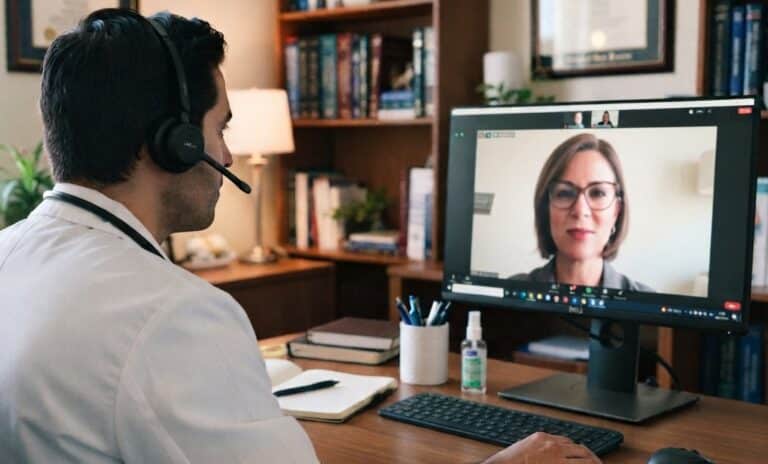
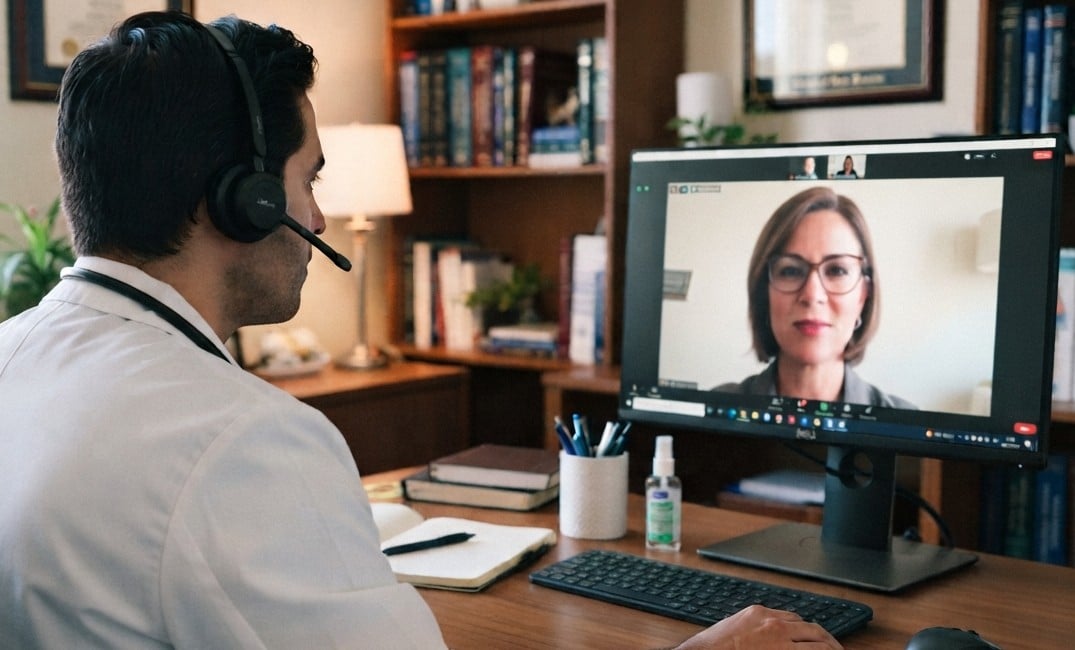
Because it is the only way to give you medical care that actually works where you are. A doctor licensed in the country can legally see you and prescribe there. They know which medicines are available, what they are called locally and which ones need a prescription. They know which local pharmacies, laboratories and clinics to point you to. And when a video consultation is not enough, they know where you should go in person. The technology, the support team and the quality checks are international; the medical act is always local. Each doctor issues the prescription from their own national system, under their own licence, and we never replace that with a generic document of our own.
How do online prescriptions work in Mexico?
In Mexico you are seen by a doctor licensed in Mexico, and the prescription includes their name and their cédula profesional, the professional licence number that Mexican pharmacies look for. This is especially important for antibiotics, which in Mexico are always sold with a prescription, and which the pharmacy registers when it dispenses them. I am also licensed in Mexico and see patients there myself, so I know first-hand how often travellers are surprised by this rule.
The problems we see most often in Mexico are the ones you would expect in a country people visit for its beaches, food and cities: traveller’s diarrhoea, ear infections after swimming in the sea or in cenotes, urinary infections, skin reactions and sunburn, and respiratory infections at altitude in Mexico City. Whether you are in Cancún, Tulum, Playa del Carmen, Mexico City, Oaxaca or Puerto Vallarta, the process is the same: you fill in the form, a doctor in Mexico accepts your case and you connect by video.
Can I see a doctor online in the Dominican Republic?
Yes. Our doctors in the Dominican Republic are authorised to practise in the country and can see you by video in English or Spanish. When it is clinically appropriate, they issue a local prescription that you can take to a pharmacy wherever you are staying, from Punta Cana and Bávaro to Santo Domingo, Puerto Plata, Cabarete or Las Terrenas.
Many consultations in the Caribbean are about heat, stomach problems, skin and ear infections and insect bites. Dengue is present in the Dominican Republic, as it is in Mexico, so if you develop a high fever after a mosquito bite, tell the doctor. Severe abdominal pain, persistent vomiting or bleeding gums are signs that you need to be seen in person straight away, and we will tell you so.
Travelling in Italy, Mexico or the Dominican Republic?
Talk by video to a doctor licensed in the country where you are, and get a prescription the local pharmacy accepts.
How can I make sure the pharmacy accepts my prescription?
A few small details avoid most problems. Check that the name on the prescription is spelled exactly as in your passport, and carry the passport with you when you go to the pharmacy. Ask the doctor to include the active ingredient and not only a brand name, because the same medicine is sold under different names in different countries. If you take a regular medication, bring a photo of the box or your old prescription to the consultation, so the doctor can find the local equivalent. And keep in mind that some medicines, such as strong painkillers, sleeping pills or ADHD treatment, have special rules in each country and cannot always be prescribed by video.
Which nomad communities are we working with?
Members of Nomad Club, the global community for digital nomads and remote workers, already have a preferential rate on their consultations with us. We are now in conversations with other communities that work with digital nomads and remote workers, because people who spend weeks or months in a country are the ones who end up needing a doctor. If you run a community, a coworking or a coliving and want your members to have a doctor they can reach wherever they are, you can read about our partner programme or write to us at info@traveldoctores.com.
What comes next for TravelDoctores?
Italy taught us something we now apply everywhere: opening a country is not just finding doctors, it is making sure that everything that happens after the video call works. That is why we keep building local relationships around the consultation. That includes clinical laboratories, so that tests requested by video can be done close to where you are staying, and clinics, for patients who need to be seen in person.
We are a company that operates in 13 countries, but you will always be seen by a doctor from the place where you are. I believe that is the right way to do telemedicine for people on the move, and it is the way we will keep growing.
Dr. RossiPhysician and founder, TravelDoctores
Frequently asked questions
Usually not. A prescription is valid in the country where it was issued. Within the European Union there is a cross-border prescription format, but outside the EU each country requires a prescription from a doctor licensed in that country.
Yes. Through TravelDoctores, a doctor registered in Italy issues a prescription with your real name, date of birth and passport number, in a format Italian pharmacies recognise. You do not need an Italian tax code.
Yes. TravelDoctores connects you by video with doctors licensed in Mexico, who issue the prescription with their professional licence number (cédula profesional), which is what Mexican pharmacies check. Antibiotics in Mexico always require a prescription.
Yes. TravelDoctores has doctors authorised to practise in the Dominican Republic, who can see you by video in English or Spanish and issue a local prescription when it is clinically appropriate.
Bring your prescription, printed if possible, and your passport. Check that the name on the prescription matches your passport, and ask the doctor to include the active ingredient, because brand names change from country to country.
Call the local emergency number (112 in the EU, 911 in Mexico and the Dominican Republic) if you have chest pain, difficulty breathing, signs of a stroke, a serious injury, heavy bleeding or loss of consciousness. A video consultation does not replace emergency care.
Talk to a doctor licensed where you are
Video consultation · 13 countries · Local prescriptions your pharmacy accepts