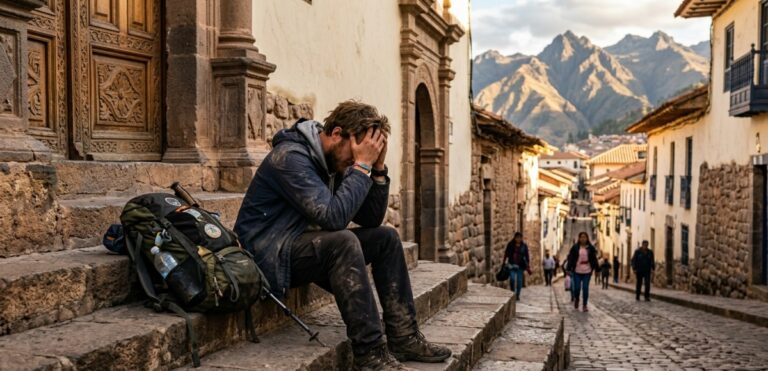

Altitude Sickness in Quito: Symptoms, Tips & Warning Signs
You land in Quito, drop your bags, and by evening you have a pounding headache, a queasy stomach and a strange feeling that you can’t quite catch your breath. It’s not the empanadas. Quito is one of the highest capital cities in the world, and altitude sickness is the most common health surprise for visitors. Here’s what’s normal, what helps, what to avoid, and when to get medical advice.
The short version: Quito sits at about 2,850 m (9,350 ft). Mild altitude sickness is common in the first day or two, usually eases as your body adjusts, and is mainly managed with rest, fluids and not going higher until you feel better. Severe symptoms are an emergency.
How high is Quito, really?
Quito’s historic centre is at roughly 2,850 m (9,350 ft). That’s moderate altitude, and many travellers feel fine, but a lot of people do notice it, especially when they arrive by plane from sea level and have no time to adjust gradually.
The bigger surprise is the day trips. Several popular excursions go well above the city, which is where symptoms often appear for the first time:
- TelefériQo and Cruz Loma: about 3,945 m to 4,100 m
- Quilotoa crater rim: about 3,900 m
- Cotopaxi National Park: parking areas around 4,500 m, with the summit at 5,897 m
Cuenca, the other big expat favourite, is lower at about 2,560 m (8,400 ft), so it’s usually easier on the body than Quito.
Common symptoms to expect
Altitude sickness, medically called acute mountain sickness, usually starts within the first 6 to 24 hours after arriving. Mild cases often include:
For most travellers these mild symptoms ease within one to three days as the body adjusts. If you’re also wondering about stomach upset, vomiting can happen with mild altitude sickness, but repeated vomiting is a reason to get checked.
What usually helps your first days in Quito
- Take the first day easy. Skip the big hike or the long walking tour and let your body adjust.
- Drink water regularly. The air is dry and fluid loss is easy to underestimate.
- Go light on alcohol for the first night or two, since it can worsen headaches and disturb sleep at altitude.
- Eat lighter meals if you feel nauseous, and don’t force heavy food.
- Don’t go higher while you have symptoms. Rest at the same altitude until they ease, and plan the high day trips (Cotopaxi, Quilotoa) for later in your stay.
- Pace yourself on stairs and hills. Quito’s old town is steep and breathlessness is normal at first.
Mild headaches or nausea can often be handled with rest and fluids. But if symptoms are getting worse, or you’re unsure whether what you feel is altitude sickness, a quick video consultation can help you decide what to do next.
Altitude sickness medicine: what to know
“Altitude sickness medicine” is one of the most searched phrases on the topic, so it’s worth being clear. There is no over-the-counter pill that reliably prevents or cures altitude sickness.
Some travellers are prescribed a medicine such as acetazolamide, but it isn’t right for everyone. Whether it’s suitable depends on your health history, any allergies (for example to sulfa drugs), pregnancy, kidney or other conditions, and your itinerary. Doses and timing are a physician’s decision, never something to copy from a forum.
Two practical points:
- Timing: when a physician does recommend a preventive medicine, it is normally started before you ascend, so the best moment to ask is before you fly to Quito, not after symptoms begin.
- Whether a prescription can be issued and filled depends on the physician’s licence and local rules. The physician providing your consultation will explain what is possible in your situation.
Dramamine and other motion-sickness tablets are not a treatment for altitude sickness. They can cause drowsiness, so check with a physician or pharmacist before using one at altitude.
Altitude sickness and flying
Two different situations get mixed up here. Flying into Quito is what causes most cases, because you go from sea level to 2,850 m in a few hours. Flying out is a different story: aircraft cabins are pressurised to roughly the equivalent of 1,800 to 2,400 m, and descending to a lower altitude often helps symptoms.
If you only have mild symptoms, flying is usually fine. If you have severe symptoms such as breathlessness at rest, confusion or trouble walking, get assessed by a doctor before you travel.
Heading to the Galápagos? The islands are at sea level, so altitude symptoms from Quito typically ease on arrival. Continuing to Peru? Cusco is higher than Quito, so it’s worth planning ahead (see the English-speaking doctor in Peru page).
Warning signs: when it’s an emergency
Get emergency care immediately if you or someone with you has confusion, trouble walking in a straight line, a severe or worsening headache, breathlessness at rest, a persistent wet cough, blue or grey lips, or unusual drowsiness. These can be signs of severe altitude illness. Go to a lower altitude and call 911 in Ecuador. Online consultations are not a substitute for emergency care.
Quito has several private hospitals with emergency departments, including Hospital Metropolitano, Hospital Vozandes and Hospital de los Valles. Check the closest one to where you’re staying when you arrive, and make sure your travel insurance covers medical care at altitude.
Who is more at risk?
Anyone can get altitude sickness, even if you’re fit. You may be more likely to have problems if you:
- have had altitude sickness before
- fly in from sea level and go higher within a day or two
- have a heart, lung or blood condition, or are pregnant
- are travelling with young children or older adults
If any of these apply, it’s worth speaking to a physician before your trip rather than waiting for symptoms.
Not feeling right at altitude in Quito?
Speak with an English-speaking physician available through TravelDoctores by video, 24/7. Typically connected in about 15 minutes. €33.
More health tips for Ecuador
- English-speaking doctor in Ecuador →
- English-speaking doctor in Quito →
- English-speaking doctor in Cuenca →
- English-speaking doctor in the Galápagos →
Frequently asked questions
Yes. Quito sits at about 2,850 m (9,350 ft), which is high enough for altitude sickness, especially if you fly in from sea level and go straight to a busy first day. Symptoms are usually mild, and day trips to higher places such as Cotopaxi or Quilotoa can bring them on.
Mild symptoms usually begin within the first 6 to 24 hours after arrival and often settle within one to three days as your body adjusts. If symptoms get worse instead of better, or last longer than a few days, get medical advice.
Nausea and vomiting are common features of acute mountain sickness, the medical name for altitude sickness, alongside headache, dizziness and tiredness. Occasional nausea can be part of mild altitude sickness, but repeated vomiting, or vomiting together with a severe headache, confusion or trouble walking, is a warning sign that needs prompt medical attention.
There is no over-the-counter pill that reliably prevents or cures altitude sickness. Some travellers are prescribed a medicine such as acetazolamide, but whether it is suitable depends on your health history, allergies and travel plans, so that decision belongs to a physician. Ideally, ask before you fly rather than after symptoms start.
Dramamine (dimenhydrinate) is an antihistamine used for motion sickness. It is not a treatment for altitude sickness itself, and it can cause drowsiness. If you are considering taking it for nausea at altitude, check with a physician or pharmacist first.
Aircraft cabins are pressurised to roughly the equivalent of 1,800 to 2,400 m, so most people with mild symptoms fly without problems, and flying down to a lower altitude often helps. If you have severe symptoms such as breathlessness at rest, confusion or trouble walking, get medically assessed before travelling.
Seek emergency care right away for confusion, difficulty walking in a straight line, severe or worsening headache, breathlessness at rest, a persistent wet cough, blue or grey lips, or unusual drowsiness. In Ecuador the emergency number is 911. Moving to a lower altitude is the most important step while help is arranged.
Mild symptoms and questions about your plans can be discussed in a video consultation with a physician available through TravelDoctores, usually within about 15 minutes. Online care is not suitable for emergencies, and the physician will tell you if you need to be seen in person.
This article is general information for travellers and is not medical advice. It does not replace an in-person examination, and it is not for emergencies. If you think you or someone else has severe symptoms, call emergency services (911 in Ecuador) and move to a lower altitude.
See a doctor online while you’re in Quito
English-speaking physicians · Online 24/7 · About 15 minutes · €33