Altitude at Lake Titicaca (3,810 m): Sickness Tips
Lake Titicaca is one of the most spectacular stops in Peru, and one of the highest. Before you book the boat to the Uros islands or the night on Taquile, it’s worth knowing exactly how high you’ll be and what your body is likely to do about it. Here’s the number, what altitude sickness looks like at the lake, and when to get medical advice.
Quick answer: the surface of Lake Titicaca is at about 3,810 m (12,500 ft) above sea level. Puno, the main Peruvian base on the lake, is at about 3,830 m (12,565 ft). That’s high enough for altitude sickness to be common, especially if you arrive fast from sea level.
Altitude at Lake Titicaca and nearby places
Two things surprise most travellers. First, Titicaca is higher than Cusco, so being fine in Cusco doesn’t mean you’ll feel nothing in Puno. Second, if you fly Lima to Juliaca you go from sea level to nearly 3,800 m in about two hours, the fastest way to trigger symptoms.
What altitude sickness looks like here
Altitude sickness, medically called acute mountain sickness, usually starts within the first 6 to 24 hours after arriving. In mild cases you may notice:
For many travellers, mild symptoms ease within one to three days as the body adjusts. At this altitude, though, symptoms can be stronger than in a city like Quito, and some people do not adjust well.
How to lower your chances of getting sick
- Go up gradually when you can. A day or two in Cusco or the Sacred Valley before Puno gives your body a head start. Coming up from Arequipa or Cusco by road or train is gentler than flying in from the coast.
- Make the first day easy. Skip the strenuous hike or the long boat day until you know how you feel.
- Drink water regularly and keep alcohol light for the first nights.
- Eat lighter meals if you’re nauseous.
- Don’t go higher while you have symptoms. Rest at the same altitude. The nights on Taquile or Amantaní are higher than Puno, so plan them for later in your stay if you can.
- Think about sleeping altitude. Where you sleep matters more than where you spend the day.
Mate de coca: coca tea is a traditional Andean drink offered in many hotels. It may feel soothing, but it has not been shown to prevent or treat altitude sickness. Don’t carry coca leaves or tea bags across borders, and be aware they can affect some drug tests.
Altitude sickness medicine: what to know
There is no over-the-counter pill that reliably prevents or cures altitude sickness. Pharmacies in Peru sell remedies for soroche, but their ingredients vary, and they are not something to choose on your own.
Some travellers are prescribed a medicine such as acetazolamide. Whether it is suitable depends on your health history, allergies (for example to sulfa drugs), pregnancy, kidney or other conditions, and your route. The dose and timing are a physician’s decision.
- Timing: when a physician does recommend a preventive medicine, it is normally started before you ascend, so the best moment to ask is before you fly to Cusco, Juliaca or Puno.
- Prescriptions are independently issued by the treating physician, and whether one can be issued and filled depends on the physician’s licence and local rules. The physician providing your consultation will explain what is possible.
Warning signs: when it’s an emergency
Get emergency care immediately if you or someone with you has confusion, trouble walking in a straight line, a severe or worsening headache, breathlessness at rest, a persistent wet cough, blue or grey lips, or unusual drowsiness. These can be signs of severe altitude illness. Go to a lower altitude and call local emergency services or ask your hotel or tour operator for urgent help. Online consultations are not a substitute for emergency care.
Remote spots such as the islands are far from hospitals, so tell your host or guide early if you feel unwell, and make sure your travel insurance covers medical care at altitude and evacuation.
Who is more at risk?
- People who have had altitude sickness before
- Anyone who flies in from sea level and sleeps above 3,500 m the same day
- People with heart, lung or blood conditions, or who are pregnant
- Children and older adults
Being fit does not protect you. If any of these apply, speak to a physician before your trip.
Not feeling right at Lake Titicaca?
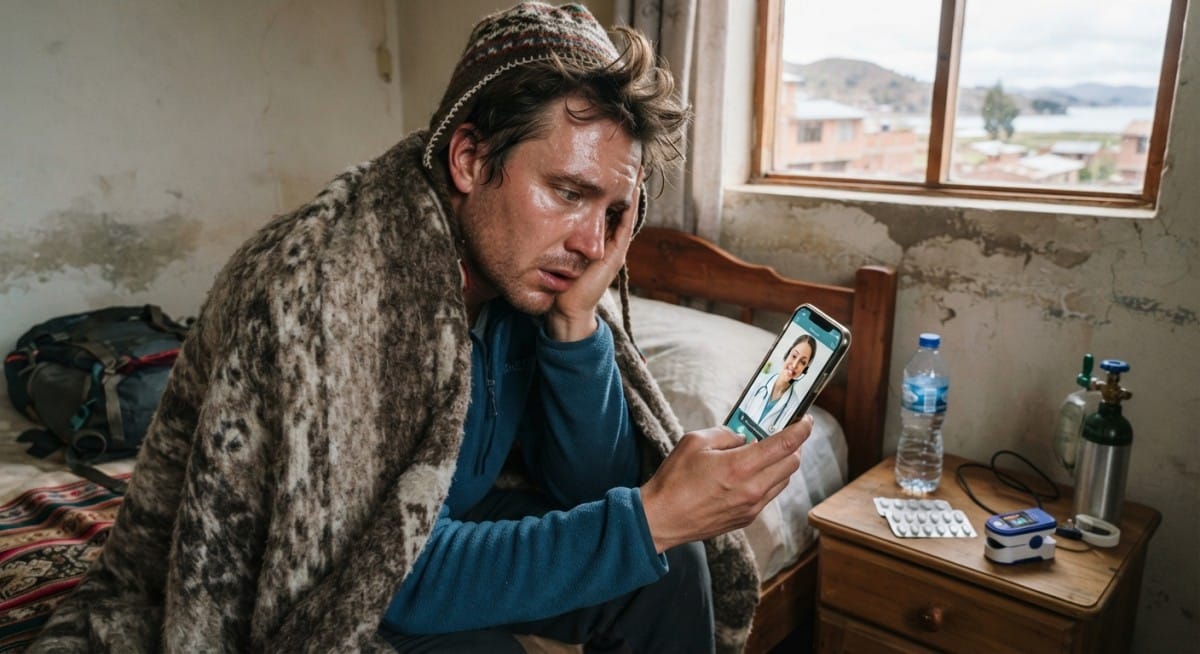
Speak with an English-speaking physician available through TravelDoctores by video, 24/7. Typically connected in about 15 minutes. €33.
More health tips for Peru
- English-speaking doctor in Puno →
- English-speaking doctor in Cusco →
- English-speaking doctor in Arequipa →
- English-speaking doctor in Lima →
- English-speaking doctor in Peru →
- Altitude sickness in Quito, Ecuador →
Frequently asked questions
Lake Titicaca’s surface sits at about 3,810 m (12,500 ft) above sea level, which makes it one of the highest large lakes in the world. The Peruvian city of Puno, on its shore, is at about 3,830 m (12,565 ft).
Puno is higher than Cusco. Puno is at about 3,830 m (12,565 ft) and Cusco at about 3,400 m (11,150 ft), a difference of roughly 430 m. Lima is at sea level and Arequipa is at about 2,335 m.
Yes. At around 3,800 m, altitude sickness is common, especially if you arrive quickly from sea level, for example by flying from Lima to Juliaca. Symptoms are usually mild, such as headache, nausea, dizziness and poor sleep, but they can be serious in some people.
Mild symptoms usually start within 6 to 24 hours of arriving and often ease within one to three days as the body adjusts. If symptoms get worse instead of better, do not go higher and get medical advice.
Ascend gradually when you can, for example by spending a day or two in Cusco or the Sacred Valley before Puno, take the first day easy, drink water regularly and limit alcohol. If you have had altitude problems before or have a health condition, speak to a physician before you travel.
No over-the-counter pill reliably prevents or cures altitude sickness. Pharmacies in Peru sell remedies for soroche (altitude sickness), but ingredients vary, so ask a pharmacist or physician rather than choosing one yourself. A physician may prescribe a medicine such as acetazolamide to some travellers, but that depends on your health and itinerary.
Coca tea is a traditional drink in the Andes and is offered in many hotels. It may feel soothing, but it has not been shown to prevent or treat altitude sickness. Do not take coca leaves or tea bags across borders, and be aware that coca products can affect some drug tests.
Seek emergency care right away for confusion, trouble walking in a straight line, a severe or worsening headache, breathlessness at rest, a persistent wet cough, blue or grey lips, or unusual drowsiness. Descending to a lower altitude is the most important step while help is arranged.
Mild symptoms and questions about your itinerary can be discussed in a video consultation with a physician available through TravelDoctores, usually within about 15 minutes. Online care is not suitable for emergencies, and the physician will tell you if you need to be seen in person.
This article is general information for travellers and is not medical advice. It does not replace an in-person examination, and it is not for emergencies. Altitudes are approximate and vary by source. If you think you or someone else has severe symptoms, move to a lower altitude and call local emergency services.
See a doctor online while you’re in Peru
English-speaking physicians · Online 24/7 · About 15 minutes · €33