Antibiotics for Travelers Diarrhea: Do You Need Them?
You’re a few days into your trip, and your stomach has other plans. Cramps, a dash to the bathroom, maybe a fever. Within hours the question is the same for almost every traveller: do I need antibiotics for traveler’s diarrhea? Most of the time the answer is no, but sometimes it is yes, and knowing the difference saves you days of feeling awful, and keeps you from taking the wrong thing. Here is how it works, what to do in the meantime and when to see a doctor.
The short version: most traveler’s diarrhea gets better on its own in three to five days with fluids and rest, so antibiotics for travelers diarrhea are not needed in most cases. A physician may consider them if you have fever, blood in the stool, severe symptoms or no improvement. Don’t self-medicate with leftover or pharmacy antibiotics, and get help early for babies, children and pregnancy.
Do you really need antibiotics for travelers diarrhea?
Traveler’s diarrhea is the most common illness in people travelling to new countries. It is usually caused by bacteria picked up from food or water, though viruses and parasites can also be responsible. Whatever the cause, in most healthy adults it is mild and short: loose stools for a few days, some cramping and tiredness, then recovery.
Antibiotics only work against bacteria, and even then they often make little difference to a mild case. That is why doctors usually reserve them for people who are more unwell. Taking them “just in case” brings side effects and resistance without much benefit.
When a doctor may consider antibiotics
A physician is more likely to consider antibiotics for traveler’s diarrhea when there are signs of a more serious infection or a case that isn’t settling:
The decision is the doctor’s, not yours. It depends on your symptoms, your age and health, allergies and other medicines you take, and sometimes tests. In some cases the right answer is a different treatment, or no antibiotic at all.
Why not to self-medicate abroad
Rules vary a lot by country. In some places pharmacies will hand over antibiotics without a prescription, and in others they won’t, and that tells you nothing about whether you need one. The wrong antibiotic can cause side effects, hide a more serious problem and add to antibiotic resistance. If you want a wider look at this, read our guide on getting antibiotics while travelling.
What to do in the first 24 to 48 hours
- Hydrate first. Diarrhea pulls fluid out of your body quickly. Drink water and oral rehydration solution, which is sold at most pharmacies, and sip small amounts often if you feel nauseous.
- Eat light when you can. Plain foods such as rice, bread, bananas or soup are usually well tolerated. Skip alcohol, very fatty or spicy food and, if you notice it makes things worse, dairy.
- Rest. Your body is doing its job. Cancel the long excursion and stay near a bathroom.
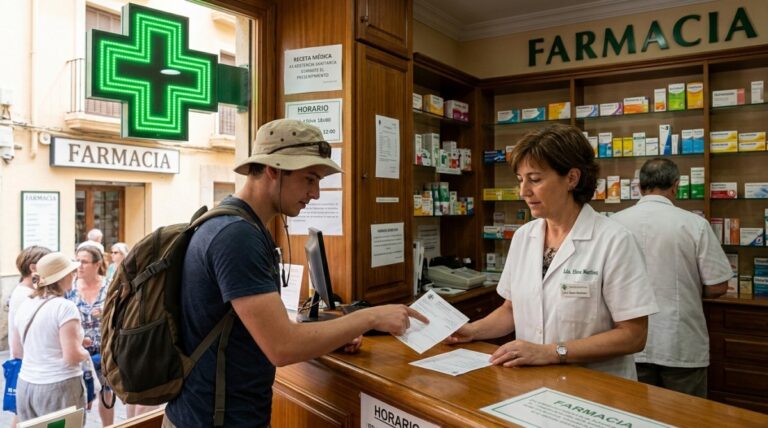
- Ask a pharmacist before taking anything. They can tell you whether an anti-diarrhea medicine is suitable for you. These are not suitable if you have a fever or blood in the stool.
- Wash your hands often and avoid preparing food for others, since traveler’s diarrhea can spread.
- Watch for warning signs that mean it is time to speak to a doctor, listed below.
When to see a doctor
Get medical advice promptly if you have:
Get emergency care immediately for confusion, fainting, severe dehydration, very severe abdominal pain, or if you cannot keep down any fluid at all. Call your local emergency number or go to the nearest emergency room. Online consultations are not a substitute for emergency care.
Babies, children, pregnancy and older adults
Babies and young children can become dehydrated within hours, and pregnant women, older adults and people with chronic conditions are more affected by both the illness and the treatment choices. In these groups, don’t try leftover medicines and don’t wait it out. Never give aspirin to children, and get medical advice early.
Getting assessed online while you travel
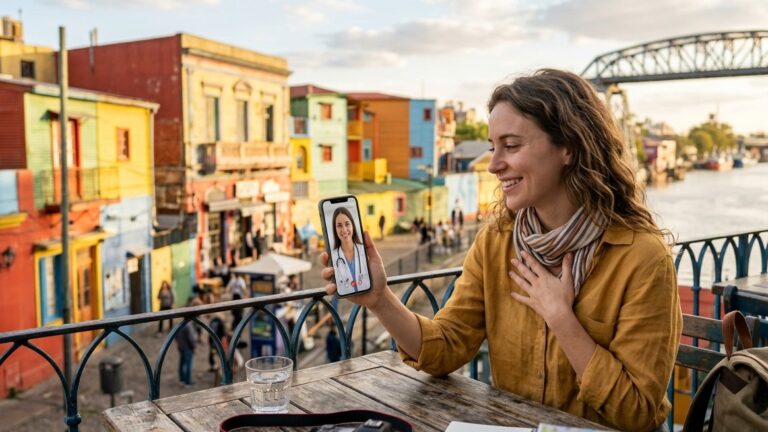
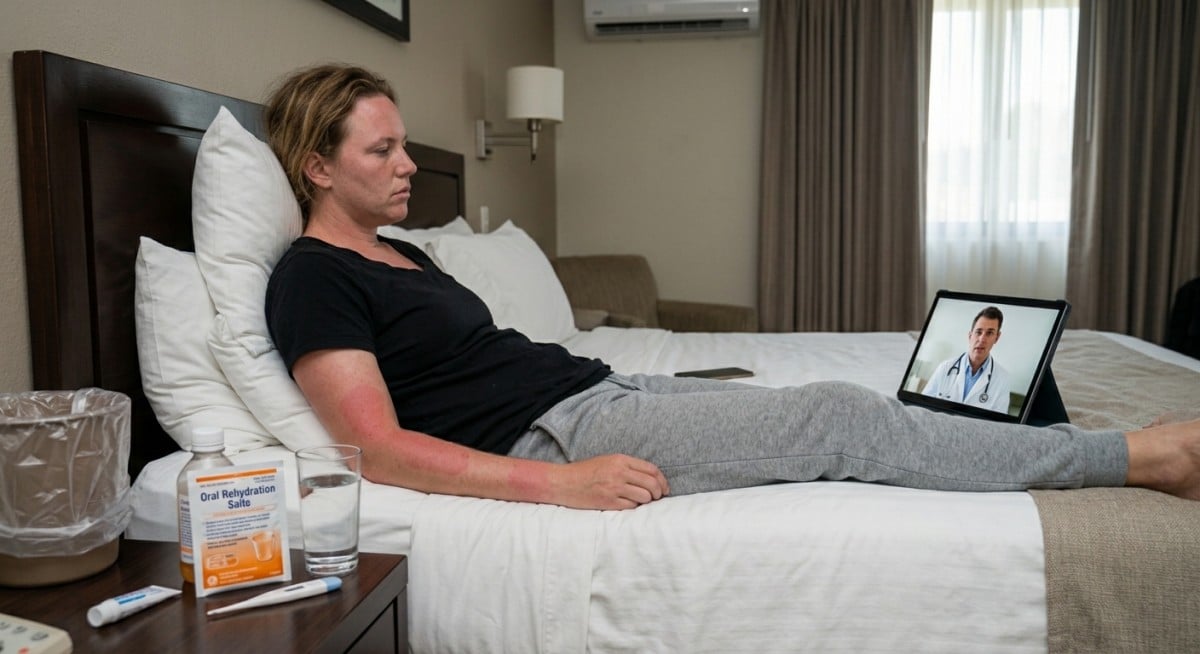
If you are not sure whether your symptoms need more than fluids, a short video consultation can help you decide. A physician available through TravelDoctores can ask about your symptoms, judge how serious they are and tell you whether you can recover on your own or need further care, without you leaving your hotel. You can also speak to a doctor online in English at any hour. If a prescription is clinically appropriate, it is independently issued by the treating physician and depends on the physician’s licence and local rules.
Looking for the service itself? See how traveler’s diarrhea treatment online works, step by step, wherever you are.
Avoid a repeat
Drink bottled or properly treated water, eat food that is freshly cooked and served hot, be careful with salads, raw shellfish and ice, and wash your hands before eating. Routine preventive antibiotics are not recommended for most travellers. If you have a condition that makes diarrhea risky, talk to a doctor before you travel.
Stomach trouble that isn’t improving?
Speak with an English-speaking physician available through TravelDoctores by video, 24/7. Typically connected in about 15 minutes. €33.
More reading for travellers
- Traveler’s diarrhea treatment online →
- Need antibiotics while travelling? A traveller’s guide →
- Food poisoning in Argentina: what travellers should know →
- English-speaking doctor in Punta Cana →
- English-speaking doctor in Cancún →
- Leer en español: diarrea del viajero en México →
Frequently asked questions
Usually not. Most cases of traveler’s diarrhea are mild and settle by themselves in about three to five days with fluids, rest and light food. Antibiotics are kept for more serious cases, such as diarrhea with fever, blood in the stool, severe symptoms or no improvement, and only a physician can decide whether one is appropriate for you.
A physician may consider antibiotics for traveler’s diarrhea when symptoms are moderate to severe, for example many watery stools a day that stop you functioning, fever, blood or mucus in the stool, or diarrhea that is not improving after a couple of days. They do not work against viruses or parasites, so the decision depends on your symptoms, your health and sometimes tests.
Most people recover in three to five days without antibiotics, as long as they stay hydrated. Diarrhea lasting more than about a week is called persistent and should be assessed by a doctor, because it can be caused by a parasite or another condition that needs testing and specific treatment.
It is not a good idea. The right antibiotic depends on the likely cause and on your health, allergies and other medicines, and the wrong one can cause side effects, hide a more serious problem and add to antibiotic resistance. Rules also differ by country: some pharmacies sell antibiotics without a prescription and others require one. Ask a physician or a pharmacist before taking anything.
Drink plenty of fluids, ideally oral rehydration solution sold at pharmacies, and sip small amounts often if you feel sick. Eat light, plain foods as soon as you can, and rest. A pharmacist can advise whether an anti-diarrhea medicine is suitable, but these are not suitable if you have fever or blood in the stool, so check first.
Antibiotics do not help viral or parasitic diarrhea, can cause side effects such as stomach upset or rashes, and can upset the gut bacteria that help you recover. Using them when they are not needed also contributes to antibiotic resistance, which is why they are used only when a physician judges the benefit is worth it.
A video consultation with a physician available through TravelDoctores can assess your symptoms and tell you whether you need treatment or can recover on your own, usually within about 15 minutes, 24/7, for €33. If a prescription is clinically appropriate, it is independently issued by the treating physician, depends on the physician’s licence and local rules, and you cannot choose the medication. Online care is not suitable for emergencies.
No. Babies, young children, pregnant women, older adults and people with chronic conditions can become dehydrated faster or are more affected by treatment choices. Do not give leftover medicines, never give aspirin to children, and get medical advice promptly rather than self-treating.
See a doctor if you have blood or black stools, fever, severe or constant stomach pain, repeated vomiting that stops you drinking, signs of dehydration (very dark urine, dry mouth, dizziness), diarrhea that is not improving after about 48 hours, or if the patient is a baby, young child, pregnant or has a chronic illness. Confusion, fainting or being unable to keep any fluid down is an emergency.
Routine preventive antibiotics are not recommended for most travellers. The best protection is careful food and water choices and hand washing. If you have a health condition that makes diarrhea risky, talk to a doctor before you travel about what is right for you.
This article is general information for travellers and is not medical advice. It does not replace an in-person examination, and it is not for emergencies. If you think you or someone else has severe dehydration or a serious illness, call your local emergency number or go to the nearest emergency room.
See a doctor online, wherever you’re travelling
English-speaking physicians · Online 24/7 · About 15 minutes · €33