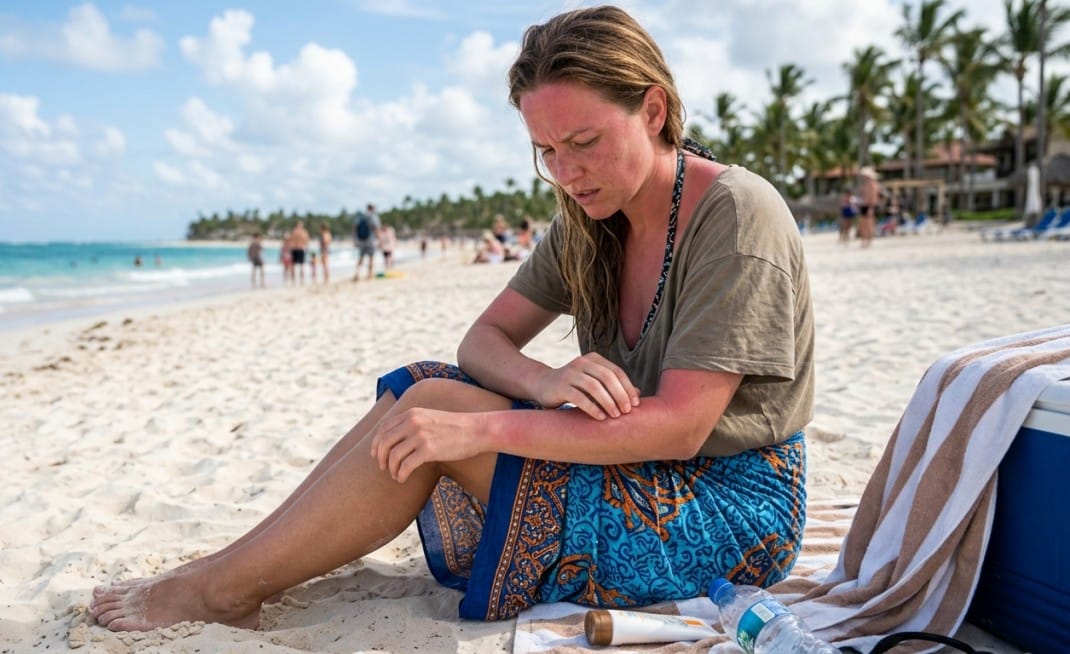
Severe Sunburn Relief: Fast Tips + Warning Signs
It’s day two of your beach trip and you can’t put a T-shirt on. Your skin is red, hot and tight, maybe blistered, and even the shower feels like needles. A bad sunburn is one of the most common reasons travellers feel miserable on holiday, and it is easy to underestimate near the equator, at altitude or out on a boat. Here is severe sunburn relief that actually helps, what to avoid, and the signs that mean it’s time to see a doctor.
The short version: for severe sunburn relief, get out of the sun, cool the skin, moisturise often and drink plenty of water. Don’t pop blisters, and don’t put ice, butter or heavy oils on the burn. Fever, chills, blisters over a large area, dizziness or signs of dehydration, or any sunburn in a baby, mean you should get medical advice.
What counts as a severe sunburn?
Most sunburn is mild: red, sore skin that settles in a few days. A burn is more serious when it comes with blisters, a lot of pain, or symptoms that make you feel unwell all over. Redness usually shows up within a few hours, but the full extent often isn’t clear until the next morning, so a burn that looked fine at the beach can be much worse 12 to 24 hours later.
Signs that a sunburn is more than mild:
Severe sunburn relief: the first 24 hours
- Get out of the sun now. Move into the shade or indoors and cover up. Another hour of sun on a fresh burn makes it much worse.
- Cool the skin. Take a cool (not ice-cold) shower or bath, or hold cool damp cloths on the burn for 10 to 15 minutes at a time.
- Moisturise. Apply a fragrance-free moisturiser or aloe vera gel to damp skin, and reapply often as the skin dries and tightens.
- Drink more water. A bad burn pulls fluid to the surface of the skin, and heat and travel make dehydration easier.
- Ask a pharmacist about pain relief. They can tell you which over-the-counter option is safe for you, especially if you have stomach, kidney or asthma problems, are pregnant or take other medicines. Never give aspirin to children.
- Wear loose, soft clothes and sleep on cool, clean sheets. Tight straps and waistbands rub burned skin.
- Stay out of the sun until it heals. Sunscreen on a burn is not enough protection, so cover up and stay in the shade.
What to avoid with a bad sunburn
Itching, swelling and peeling: what’s normal
Severe itching
Intense itching is common as sunburned skin heals, often a day or two after the burn and again when peeling starts. Cool compresses and a fragrance-free moisturiser help, and scratching makes it worse. If you also get a rash, hives or small raised bumps, it may be a reaction to the sun rather than a plain burn, so ask a doctor.
Swelling
Mild puffiness of sun-exposed areas such as the face, hands, feet and ankles is common in a bad burn. Swelling of the face, lips or eyes together with trouble breathing is an emergency, and swelling that is severe or spreading should be checked by a doctor.
Peeling
Peeling usually starts a few days after the burn and can last about a week. It is the skin shedding damaged cells, so you can’t stop it, but you can keep it comfortable: moisturise often and let the skin come off by itself instead of pulling it. The new skin underneath is sensitive, so keep it covered.
Is it “sun poisoning”?
“Sun poisoning” is a popular term, not a medical diagnosis, and it isn’t true poisoning. It usually describes a severe sunburn with fever, chills, nausea, headache or dizziness, or a rash caused by sensitivity to the sun. Either way, if you feel unwell after sun exposure, it is worth getting checked.
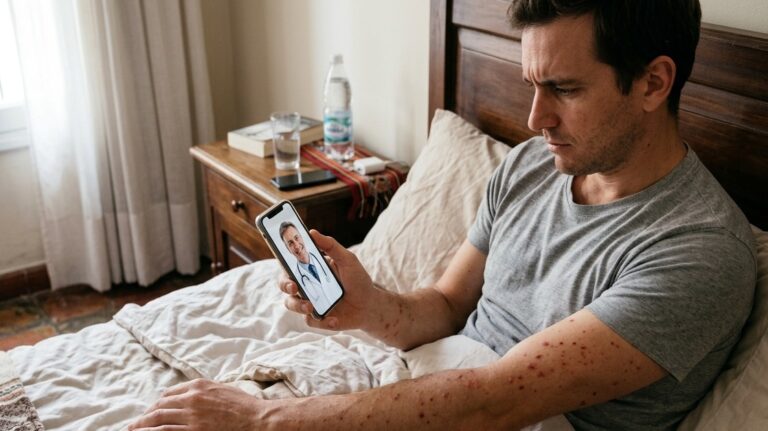
Not sure whether your burn is “just a burn”? A quick video consultation can help you judge how serious it is and what to do next, without leaving your hotel room.
When to see a doctor
Get medical advice promptly if you have:
Get emergency care immediately for confusion, fainting, a very high body temperature with hot, dry skin, a racing heartbeat, or swelling of the face and lips with trouble breathing. These can be signs of heat stroke or a severe allergic reaction. Call your local emergency number or go to the nearest emergency room. Online consultations are not a substitute for emergency care.
Babies and young children
Babies and young children burn faster and dehydrate faster. Any sunburn in a baby under 12 months should be assessed by a doctor, and a sunburn with fever in a toddler or older child should be checked promptly. Keep babies out of direct sun, use shade, hats and loose clothing, and never give aspirin to children.
Where the sun catches travellers out
It’s winter in Europe, but December to March is peak summer in Brazil, Argentina and Chile, and the Caribbean and Colombian coasts are at their sunniest and busiest. A few situations burn people who are usually careful:
- Near the equator. In Ecuador, the Galápagos and the Colombian coast the sun is more direct, and the UV index often reaches extreme levels.
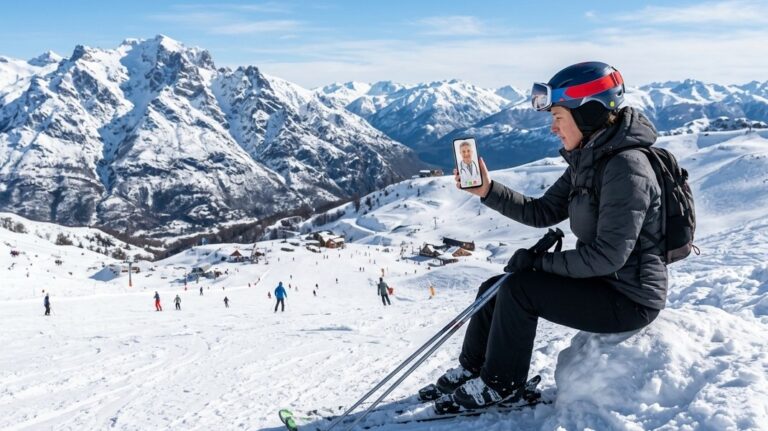
- At altitude. UV increases by roughly 10% for every 1,000 m you climb, and thin, cool air hides the heat. If you’re heading to Quito or Cusco, read our guides to altitude sickness in Quito and altitude sickness in Cusco too.
- On the water. Boats, snorkelling trips and beaches reflect sunlight, and the breeze makes you feel cooler than you are.
- On cloudy days. A large share of UV still gets through cloud, so overcast skies are a common way to burn.
To avoid a repeat, use a broad-spectrum sunscreen of SPF 30 or higher, apply it generously 15 to 30 minutes before going out, and reapply about every two hours and after swimming or sweating. Seek shade between 10 am and 4 pm, and add a hat, UV-blocking sunglasses and light long sleeves.
Sunburn that doesn’t feel right?
Speak with an English-speaking physician available through TravelDoctores by video, 24/7. Typically connected in about 15 minutes. €33.
More health tips for sunny destinations
- English-speaking doctor in Rio de Janeiro →
- English-speaking doctor in Punta Cana →
- English-speaking doctor in Cartagena →
- English-speaking doctor in the Galápagos →
- English-speaking doctor in Cancún →
- English-speaking doctor in Brazil →
Frequently asked questions
Get out of the sun, cool the skin with a cool (not ice-cold) shower or damp cloths, apply a fragrance-free moisturiser or aloe vera gel, and drink plenty of water. A pharmacist can advise on safe over-the-counter pain relief. Avoid ice directly on the skin, butter or heavy oils, numbing creams ending in -caine, and popping blisters. If you have fever, chills or widespread blisters, get medical advice.
Redness and pain usually peak within about 24 hours and ease over two to three days. Peeling typically starts a few days later and can last about a week. A severe burn with blisters can take two weeks or longer to heal, and it is worth having it checked.
Itching is common as sunburned skin heals, often one to three days after the burn and again when peeling starts. Cool compresses and a fragrance-free moisturiser help, and scratching makes it worse. If you also get a rash, hives or small raised bumps, it could be a reaction to the sun, so ask a doctor.
You cannot fully prevent peeling, because it is the skin shedding damaged cells, but you can keep it comfortable. Moisturise often, stay out of the sun, and let the skin come off by itself instead of pulling it. Newly exposed skin is sensitive, so protect it with clothing and sunscreen.
Yes. Mild swelling of sun-exposed areas such as the face, hands, feet and ankles is common in a bad sunburn. Swelling of the face, lips or eyes together with difficulty breathing is an emergency, and swelling that is severe or spreading should be checked by a doctor.
A severe sunburn can cause fever, chills, headache, nausea and tiredness, sometimes called sun poisoning. A fever with sunburn is a reason to get medical advice, and in a baby or toddler it should be assessed promptly.
Sun poisoning is a popular term, not a medical diagnosis, and it is not true poisoning. It usually describes a severe sunburn with symptoms such as fever, chills, nausea, headache or dizziness, or a rash caused by sensitivity to the sun. If you feel unwell after sun exposure, see a doctor.
No. Blisters protect the skin underneath while it heals, and popping them raises the risk of infection. Keep the area clean and loosely covered. Large blisters, blisters on the face, or signs of infection such as pus or spreading redness need a doctor.
See a doctor if you have blisters over a large area, fever or chills, severe pain, signs of dehydration (very dark urine, dry mouth, dizziness), signs of infection, sunburned eyes, or a burn that is getting worse after a few days. Any sunburn with fever in a baby or young child needs prompt medical attention. Confusion, fainting or a very high body temperature is an emergency.
Yes. A video consultation with a physician available through TravelDoctores can help you judge how serious the burn is and what to do next, usually within about 15 minutes, 24/7, for €33. If it is clinically appropriate, the treating physician can also advise on further treatment. Online care is not suitable for emergencies, and the physician will tell you if you need to be seen in person.
This article is general information for travellers and is not medical advice. It does not replace an in-person examination, and it is not for emergencies. If you think you or someone else has a severe burn or heat-related illness, call your local emergency number or go to the nearest emergency room.
See a doctor online, wherever you’re travelling
English-speaking physicians · Online 24/7 · About 15 minutes · €33