What Causes Travelers Diarrhea? Relief Plan + Doctor 24/7
It usually starts with a rumble in your stomach on day two or three of a trip, and by evening you’re planning your next hour around the nearest bathroom. If that sounds familiar, you’re in good company: traveler’s diarrhea is the most common illness among people visiting a new country. So what causes travelers diarrhea, how long can it last, and what can you actually do about it? Here is the straight answer, without the panic.
The short version: what causes travelers diarrhea is usually food or water contaminated with bacteria, and sometimes viruses or parasites. Most cases last three to five days and settle with fluids, rest and light food. See a doctor for blood in the stool, fever, severe pain, signs of dehydration, no improvement after about 48 hours, or if it affects a baby, child or pregnant woman.
What causes travelers diarrhea?
Traveler’s diarrhea is an infection of the digestive system. You pick up germs by eating or drinking something contaminated, or by touching your mouth with unwashed hands. The three types of cause are:
- Bacteria. The most common cause by far. They get into food or water through poor hygiene, or by contamination during preparation or storage.
- Viruses. These spread easily between people, for example on cruises, in hotels and in crowded places.
- Parasites. Less common, but they tend to last longer and often need testing and specific treatment.
It is less about “dirty” countries and more about the difference between what your body is used to and what it meets. Your gut has built up tolerance to the microbes at home, so unfamiliar ones can make you ill even in perfectly good restaurants.
Common ways you pick it up
Symptoms: what’s traveler’s diarrhea like?
It typically starts suddenly, usually in the first week of a trip, with loose or watery stools, stomach cramps and an urgent need to go. Nausea, bloating and tiredness are common, and some people have a mild fever or vomiting. In most healthy adults it is unpleasant but not dangerous, as long as you stay hydrated.
How long can travelers diarrhea last?
- Most cases: one to three-five days, often improving after the second or third day.
- More than a week: worth a medical assessment, since something may need treating.
- Two weeks or more: this is persistent travelers diarrhea. It is less common, and often points to a parasite or to a condition that follows an infection. It needs tests and a doctor’s advice rather than waiting it out.
What to drink and what can you eat with travelers diarrhea
Fluids matter more than food. Diarrhea drains water and salts, and dehydration is what makes people feel truly ill.
- Drink small amounts often. Safe water and oral rehydration solution from a pharmacy are the best choices. If you feel sick, sip slowly.
- Add food when you can. Rice, bread, bananas, potatoes, plain crackers or clear soup are usually well tolerated.
- Skip alcohol, very fatty or spicy food and large meals until you are better, and dairy if it seems to make things worse.
- Ask a pharmacist before taking an anti-diarrhea medicine. These are not suitable if you have a fever or blood in the stool.
- Rest and wash your hands often. Traveler’s diarrhea can spread to the people around you.
Not sure whether you’ll need more than fluids? Read when antibiotics for traveler’s diarrhea are and aren’t used.
When to see a doctor
Get medical advice promptly if you have:
Get emergency care immediately for confusion, fainting, severe dehydration, very severe abdominal pain, or if you cannot keep down any fluid at all. Call your local emergency number or go to the nearest emergency room. Online consultations are not a substitute for emergency care.
Babies, children, pregnancy and older adults
Babies and young children can become dehydrated within hours, and pregnant women, older adults and people with chronic conditions are more affected by both the illness and the treatment choices. Don’t try leftover medicines, never give aspirin to children, and get medical advice early rather than waiting it out.
How to lower your chances next time
- Choose safe water: bottled or properly treated, including for brushing your teeth, and skip ice if you’re unsure.
- Eat food that’s freshly cooked and served hot. Be careful with salads, raw shellfish and anything that has sat out.
- Peel your own fruit and avoid unwashed raw produce.
- Wash your hands before eating, or use hand sanitiser when you can’t.
- Ease in. Give your stomach a day or two before the adventurous street-food crawl.
Getting assessed while you travel
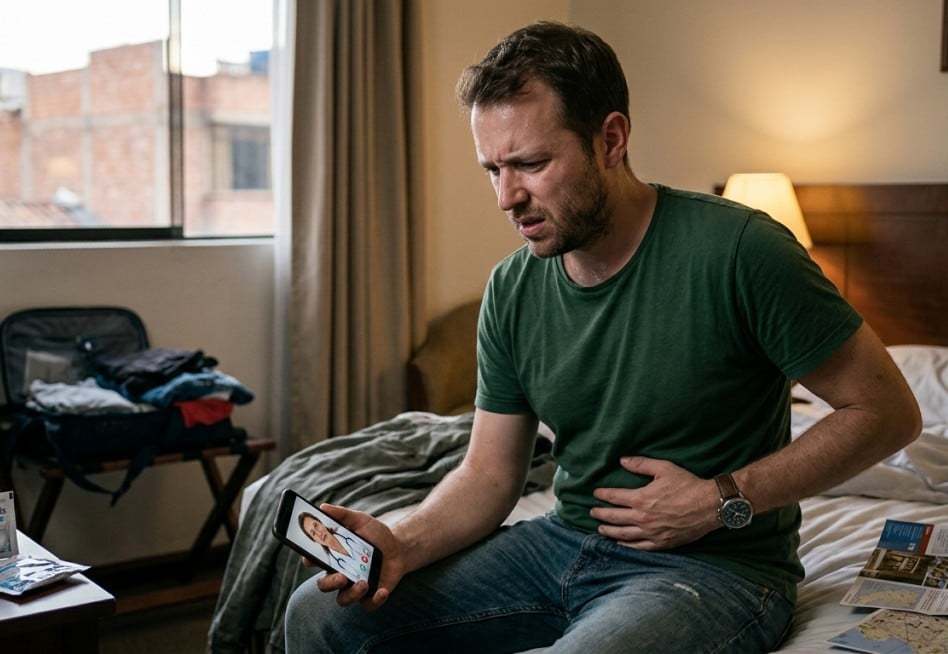
If you’re not sure whether your symptoms are normal, a short video consultation can help. A physician available through TravelDoctores can ask about your symptoms, judge how serious they are and tell you whether you can recover on your own or need further care, without you leaving your hotel. You can also speak to a doctor online in English at any hour. If a prescription is clinically appropriate, it is independently issued by the treating physician and depends on the physician’s licence and local rules.
Looking for the service itself? See how traveler’s diarrhea treatment online works, step by step, wherever you are.
Stomach trouble that isn’t improving?
Speak with an English-speaking physician available through TravelDoctores by video, 24/7. Typically connected in about 15 minutes. €33.
More reading for travellers
- Antibiotics for traveler’s diarrhea: do you need them? →
- Traveler’s diarrhea treatment online →
- Need antibiotics while travelling? A traveller’s guide →
- Food poisoning in Argentina: what travellers should know →
- English-speaking doctor in Punta Cana →
- Leer en español: diarrea del viajero en México →
Frequently asked questions
Traveler’s diarrhea is caused by eating or drinking food or water contaminated with bacteria, viruses or parasites. Bacteria are the most common cause. It happens most often in places where sanitation, food handling or water treatment differs from what your body is used to, and it usually starts within the first week of a trip.
Traveler’s diarrhea is a digestive infection that causes loose or watery stools, stomach cramps, nausea and sometimes fever, usually within days of arriving in a new country. It is the most common illness among travellers, and in most healthy adults it is mild and clears up by itself.
Most cases last 1-5 days. Diarrhea that lasts more than about a week should be assessed by a doctor, and diarrhea that continues for two weeks or more is called persistent and usually needs tests, because a parasite or another condition may be responsible.
Your gut is used to the bacteria in your home food and water and has built up some tolerance. In a new country you meet different microbes, and food hygiene and water treatment may differ, so it takes less to make you ill. Eating unfamiliar food, stress, changes in routine and travel itself can add to it.
Start with fluids, then add light, plain foods as soon as you feel able, such as rice, bread, bananas, potatoes, plain crackers or clear soup. Avoid alcohol, very fatty or spicy food and large meals while you recover. If dairy seems to make things worse, skip it for a few days.
Drink plenty of safe water and oral rehydration solution, which is sold at most pharmacies and replaces the water and salts you lose. Sip small amounts often if you feel sick. Avoid alcohol, and be careful with very sugary drinks, which can make diarrhea worse.
It can be. The germs that cause it spread through contaminated food, water and hands, so wash your hands often, especially after the bathroom and before eating, and avoid preparing food for others until you have recovered.
Persistent diarrhea is diarrhea that lasts two weeks or more. It is less common and is often caused by a parasite or by a condition that follows an infection. It needs a medical assessment, and sometimes stool tests, rather than waiting it out.
See a doctor if you have blood or black stools, fever, severe or constant stomach pain, repeated vomiting that stops you drinking, signs of dehydration (very dark urine, dry mouth, dizziness), diarrhea that is not improving after about 48 hours, or if the patient is a baby, young child, pregnant or has a chronic illness. Confusion, fainting or being unable to keep any fluid down is an emergency.
Yes. A video consultation with a physician available through TravelDoctores can assess your symptoms and tell you whether you can recover on your own or need further care, usually within about 15 minutes, 24/7, for €33. Any prescription is independently issued by the treating physician and depends on the physician’s licence and local rules. Online care is not suitable for emergencies.
This article is general information for travellers and is not medical advice. It does not replace an in-person examination, and it is not for emergencies. If you think you or someone else has severe dehydration or a serious illness, call your local emergency number or go to the nearest emergency room.
See a doctor online, wherever you’re travelling
English-speaking physicians · Online 24/7 · About 15 minutes · €33